

How Search Engine Optimax™ Handles ALL of your Keyword Research

Marketing

Search Engine Optimax™ is designed the way that you would never need any other SEO tool. This post shows you how it guides you through just one of the many features of Optimax™ – the whole keyword research process:

1. Get Keyword Suggestions

Research words with Wordtracker:

Wordtracker is yet another tool you can gain access to via Search Engine Optimax™ tools dashboard. It allows to set the match type to tailor your keyword research results:

  1. The Related match returns related keyword matches based on popularity.
  2. The Embedded match returns embedded keyword matches based on popularity.
  3. And the Exact match returns exact keyword matches based on popularity.


Research words with Google Adwords tool:

Google Adwords tool is another handy third-party utility that can be accessed from within Search Engine Optimax™
tools dashboard. You will be able to set the following keyword research options:

  • Provide up to 10 words;
  • Specify match type (Broad, phrase, exact).
  • Choose language (click “Tailor results to languages and countries” to access the option)
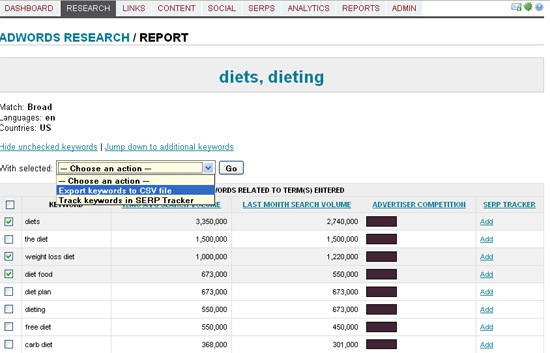
SEJ tools: Gogle keyword research tool

2. Extract Keywords from Any Page

(Useful for researching phrases your competitor tends to focus on)

Search Engine Optimax™ tools’ advanced on-page keyword analyzer runs semantic analysis of any page you point it to and helps you identify most relevant words to the current page:
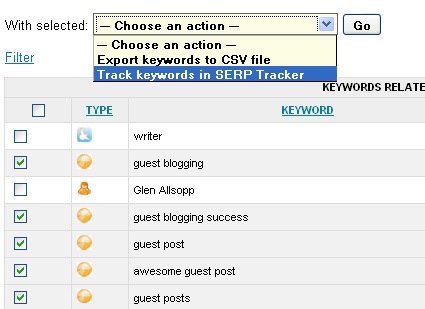
Keyword analyze: add to SERP tracker

3. Find Keywords Your Competitor Ranks for

The feature powered by SEMRush: provide a domain name or an URL and learn which keywords they enjoy high rankings for (research the competition and try get their positions):
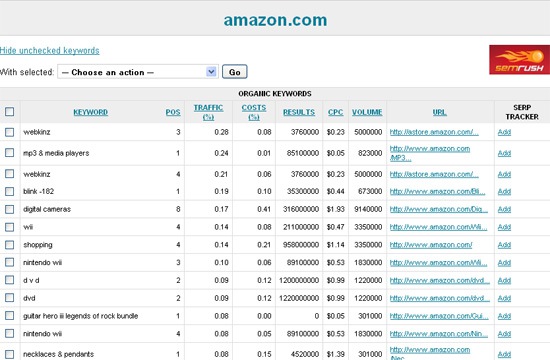
Sem rush: doain rankings

4. Monitor Keywords across Social Media and Blogs

The reputation monitoring tool you will find inside is not only good for reputation tracking, but to watch your main keyword; you can set it to aggregate results from all sources or just blogs, bookmarking services, Twitter, etc:
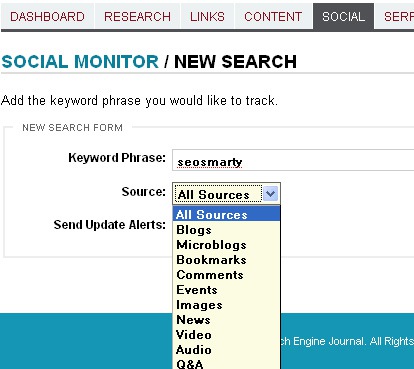
Social media monitor: add search

5. See Keywords You are Getting Search Traffic from

By letting Search Engine Optimax™ access your Google Analytics account, you get a more user-friendly report on your current search referrals:
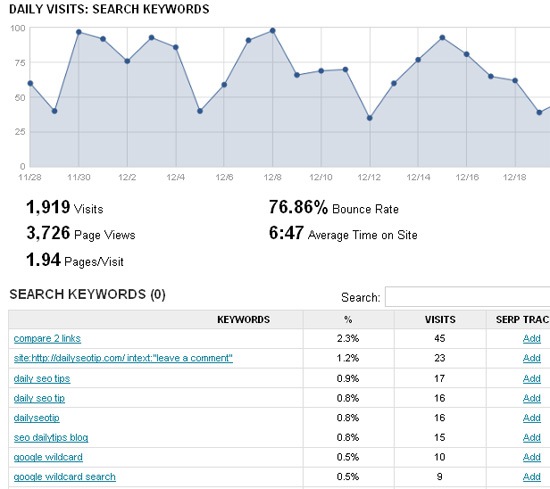
Google Analytics: search referrals

6. Track Your Keyword Positions

Search Engine Optimax™ is equipped with advanced rank tracker that allows you to monitor your rankings across dozens of search engines (including local versions) and visualizes your position change via cool-looking graphs:
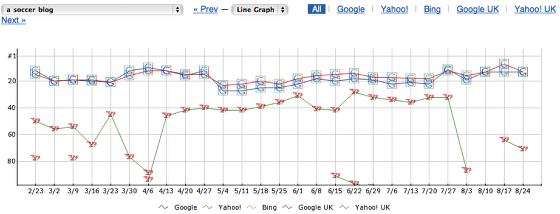
SERP tracker: trending graph

Our Po!nt: Can you think of any other keyword-research-related task Search Engine Optimax™ can’t do? Sign up for a FREE 30-day trial of Search Engine Optimax™ now to gain control of your SEO!
Online Strategy 101: Begin With The End In Mind!

Design

The most important part of the web design process is the very beginning. The initial stage of a design project is where you decide what your priorities are and what the site is supposed to do. Developing these priorities and the plan for moving forward is usually known as strategy.

Strategy begins before a web design shop does anything. It should start with your internal staff who will be on the project brainstorming notes on both your current website (including the features you want to keep and those you don’t) and your new one (what should it include?).

Web strategy doesn’t require fancy documentation or snazzy presentations. The best web strategies often start with a piece of paper and a pen. All ideas are valid at this point, and putting them into a formalized business document can make them feel concrete and final. So just write things down.

Diagrams are also really useful. Examine your online sales process, or the one you hope to have. Make a flowchart of how you think the customer experience should ideally go on your new site. Start with their initial visit to your site and take it all the way through the completion of their purchase.

What you’re looking to create is a content mission. What functions should your website serve? What problem or problems should it solve? These questions should be considered not only from the viewpoint of your own company, but also from that of your consumer.

Once you’ve got your strategy down, then it’s time to bring in your web design firm. They will be able to quickly and easily digest your strategy into a set of recommendations and a development plan that meets your needs.

Our Po!nt: Taking the time to plan your online presence will make the end result all that more effective.

Buyers 71% More Likely from Social Media Referrals [Infographic]

Ecommerce Marketing

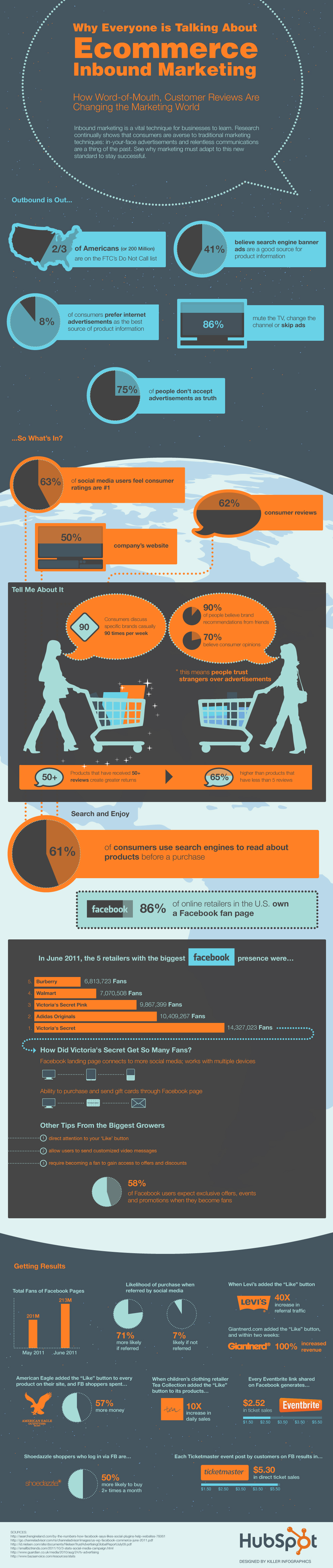
Ecommerce companies that invest in inbound marketing can greatly increase their opportunity to grow online sales, lower COCA (cost of customer acquisition), and grow new customer retention. Consumers connect, rate, discuss, and consume product information and reviews like never before, making a strong online presence paramount for all sizes of ecommerce businesses. Ecommerce inbound marketing makes it possible for online stores to take advantage of the emerging social revolution by gravitating consumers to their own brands and products, driving organic and social media traffic and sales, lowering COCA, and increasing the adoption of customer retention along the way.

This infographic design from Killer Infographics is a great illustration of the importance of ecommerce inbound marketing and social media referrals!  Enjoy!

Ecommerce Inbound Marketing vs Outbound Marketing - Infographic
Ecommerce Marketing Software – All-In-One Inbound Marketing Software

Your Homemade Website Isn’t Cutting It Anymore

Design Ecommerce Our Blog

It’s hard to believe that in 2011 Americans spent $200 billion online and projected that total would rise to $327 billion by 2016. Mainly because of the convenience and in large part because the web makes it easy to compare companies and prices.  The opportunity for retailers is huge no matter your size.  The fact remains that you’re not going to get your share of the pie with a DIY website.

A recent report from Forrester Research confirmed what just about everybody in business already knew: Americans are buying online and they are buying a lot.

Among the report’s interesting findings:

  • 53 percent of Americans made an online purchase in 2011.
  • 58 percent are expected to make an online purchase in 2016.
  • People believe they get the best deals when shopping online.
  • Tablet devices like the iPad have spurred online impulse buying.

If just these sort stats don’t make you want to reevaluate your e-commerce efforts—and perhaps plan a redesign of your website, they should.

An attractive, well-organized website, with a back-end that functions seamlessly and a shopping cart that makes the purchasing process as easy and intuitive as possible will do amazing things for your bottom line.

Ten years ago, building a quality e-commerce website was a highly expensive proposition. You had to hire an outside firm to do it. Today, businesses can use any number of open-source platforms to build a complex, yet relatively inexpensive e-commerce site.

But just because you can do it yourself, should you?

I say no. It’s too critical to your business not to get right. Granted, I work at a Web design firm, but hear me out.

These cookie-cutter websites that people are peddling for $1000 or less may be fine for some kid with a blog or a pizza parlor looking to put their menu and phone number online, but for most businesses, they just look cheesy.

Here’s the thing about cheap, template-driven websites: They look like every other cheap website out there. And that cheapens your brand. It makes you look like you don’t take your marketing and messaging seriously.

Custom designs are always going to cost more but the result is something you’ll never get from a generic template: a site that’s been designed to drive real business for you. That requires a team of people including an information architect, a designer, a front-end coder, a back-end developer, a quality assurance expert, and a project manager to coordinate all of the work.

But first, you must find the right design team. Look for one that understands your business and how to best promote your business online. When you are interviewing potential designers, make sure they can point to specific case studies of successful projects they have completed for other clients.

The design process should always start with a planning phase: That’s when your designer should demonstrate an understanding of your business, the competitive landscape, and the goals for the project.

This is followed by the design stage, where your team will map out the look and feel of the site and lay out the navigation and functionality requirements.

Finally, after all of the site specs are agreed upon, the front and back-end coding will begin. At this stage, the quality assurance process tests the site’s functionality across a variety of browsers.

It’s not a fast or cheap process. (And, by the way, it doesn’t end there: The next step involves driving traffic to it with sound marketing strategies.)

If want to be in business, then you need to be online. But if you’re doing a bad job of it online, you have no business being in business in the first place.

Improve Customer Service After the Sale

Ecommerce

It is a well known fact that an unhappy online ecommerce customer tells 10 people about their experience or more, while a happy ecommerce customer only tells three. Clearly, an unhappy ecommerce customer can have a negative impact on your e-reputation. That’s why it’s crucial to ensure satisfied online customers by improving your after-sales service.

Indeed, your post sale customer service is a major factor in the health and prosperity of your e-store. Post sale service helps increase customer loyalty, while at the same time influencing word of mouth. A good after-sales service makes for a great e-reputation – invaluable for any e-store! Here are just a few important ways to improve your after-sales service:

  • Multiply the communication channels between you and your clients
  • Establish a CRM system that allows you to build a customer profile
  • Measure customer satisfaction
  • Don’t make promises you can’t keep, and keep answers personal

Our Po!nt: Building long term customers just takes a little effort to make them feel important and appreciated.  What sort of things are you doing to build customer loyalty to your online store besides “great prices”.